New Build
How Much Does It Cost to Build a House in Dunedin? (Navigating Fixed Prices, QS Estimates & Hidden Fees)
By Connor Jones Team · 16 September 2026 · 12 min read
In 2026, the cost to build a high-performance architectural home in Dunedin typically ranges between $3,800 and $5,500+ per square metre (GST inclusive). However, this “square metre rate” is only a rough starting point. The final cost of your build depends heavily on site topography (hill suburbs vs. Taieri plains), foundation complexity, and the specific contract type you sign.
But here is the truth most builders will not tell you: relying on a square metre rate for a bank loan or a serious budget is dangerous. It ignores the “iceberg costs”—earthworks, retaining walls, professional fees, and compliance requirements—that are unique to the Otago region.
At Connor Jones Group, we know that for most homeowners in Dunedin, the biggest stress isn’t the design. It is the financial exposure. You do not want a guess. You want to know exactly what the project will cost before you sign a contract. The difference between a successful build and a budget disaster is not the price of timber. It is the gap between a Quantity Surveyor’s estimate and a Fixed Price Contract.
For a broader overview of the construction journey beyond just the financials, read our main guide to Custom Home Building in New Zealand.

Why ‘Per Square Metre’ Rates Are Dangerous for Dunedin Builds
Most online building cost calculators fail in Dunedin because they assume a “perfect world” scenario: a flat site, easy truck access, and standard soil conditions. In Otago, these conditions are rare.
If you are planning a build in hill suburbs like Maori Hill, Roslyn, or Opoho, your “square metre rate” becomes irrelevant the moment we stick a spade in the ground.
The Local Reality: What Drives Cost in Dunedin?
- Topography: Building on the flat alluvial soils of Mosgiel or the Taieri Plains often allows for a standard “raft slab” foundation. This is cost-effective. Compare this to a steep site in St Clair or Vauxhall, which may require 4-metre pole foundations, extensive retaining walls, and complex drainage systems. These structural requirements can add $50,000 to $100,000 to your budget before the floor is even laid.
- Access: Can a concrete truck drive onto your site? On many Dunedin streets, the answer is no. If we need to pump concrete 60 metres uphill or use a crane to lift steel beams over a neighbour’s house, those logistics costs must be factored in. A generic calculator will miss them every time.
- Earthworks can involve rock breaking or removal of unsuitable ground. Site investigation helps establish the likely scope.
The “Iceberg” Costs You Must Budget For
When a builder or magazine quotes a “base rate” of $4,000 per sqm, they often exclude the following hard costs:
- DCC (Dunedin City Council) Fees: Building Consents, Resource Consents, and Development Contributions.
- Professional Fees: You will need a Structural Engineer, Geotechnical Engineer, and potentially a Fire Engineer. These fees are separate from the builder’s contract.
- Hardscaping: Driveways, decks, fences and landscaping may sit outside the construction price. Any work needed for Building Code compliance, consent conditions or a separate covenant should be identified in the project scope.
The Bottom Line: A square metre rate is useful for a cocktail party conversation. It is reckless for a building contract.
Why Is the Builder’s Quote Higher than the QS Estimate?
One of the most frustrating moments for a homeowner occurs when an independent Quantity Surveyor (QS) report estimates the build at $1.3 million, but the builder’s quote comes back at $1.45 million.
You feel confused. Is the builder overcharging? Is the QS wrong?
This discrepancy is common. Here is why.
Theoretical Pricing vs. Market Reality
- The QS Role: A Quantity Surveyor uses historical data and regional averages to estimate costs. They calculate what the house should cost in a theoretical market. This report is excellent for establishing feasibility and securing initial bank funding.
- The Builder Role: We cannot use “average” rates. We must calculate the specific Preliminary & General (P&G) costs—such as site fencing, scaffolding for steep terrain, and traffic management plans—that a QS spreadsheet often underestimates.
Example: A QS might allow a standard scaffolding figure based on wall area. On a steep slope, standard scaffolding may not work, and an engineered system can cost a lot more. The QS priced the house, not the site.
What Should You Do?
Do not view the QS estimate as the “correct” price and the builder as “expensive.” The builder’s price is the one that gets the house built.
Warning: If a builder matches a low QS estimate exactly, check their Tags & Exclusions carefully. They may have excluded the difficult items (like rock excavation or hardware upgrades) to win the job, planning to charge you for them later as “Variations.”
Should I Sign a Fixed Price or Charge-Up Contract?
This is the most critical decision you will make regarding your financial exposure.
Many renovation builders in Dunedin prefer “Charge-Up” (also known as Cost Reimbursement or Time and Materials) contracts. Why? Because it transfers 100% of the financial risk to you.
Defining the Contract Types
- Charge-Up (Time & Materials): You pay for every hour the builders are on site and every invoice for materials, plus a margin. If the team is slow, you pay more. If materials are delayed, you pay for the downtime. There is no ceiling on the final cost.
- Fixed Price Lump Sum: A price is agreed for the defined Scope of Works. Exclusions, allowances and agreed variations can still affect the final amount.
Contract Comparison Table
| Feature | Fixed Price Contract | Charge-Up (Time & Materials) |
|---|---|---|
| Risk Holder | Builder carries the pricing risk for the defined work, subject to the contract’s exclusions, allowances, variations and any price-adjustment clauses. | Homeowner |
| Cost Certainty | Agreed price for a defined scope; exclusions, allowances and agreed variations can still change the final amount. | 0% (Estimate only) |
| Incentive for Speed | High (Builder loses money if slow) | None (Builder paid for hours worked) |
| Bank Preference | Required for most new builds | Difficult to finance |
| Best For | New Builds, Extensions, Major Renos | Small repairs, Rot repair |
The Verdict
For any major residential project—whether it is a new architectural home or a large extension—Fixed Price is the only safety net.
Note: Charge-Up has its place. If we are opening up a 1920s villa in St Clair to fix undefined rot, we cannot give a Fixed Price without charging a massive “risk margin.” In those specific cases, Charge-Up is fairer. But for a new home, Charge-Up is a financial gamble you do not need to take.
For more on your rights and obligations regarding contracts, the New Zealand Government’s Building Performance guide is an essential resource.
Is It Cheaper to Relocate a House or Build New?
Some buyers pick up a “bargain” relocatable house, such as an old villa or school building, planning to move it onto a lifestyle block.
The “Uneconomical” Trap
The costs show up once the building is on site:
- Wind Zones: Dunedin has “High” and “Very High” wind zones. An old building from a “Low” wind zone (like a sheltered school field) likely has timber framing that does not meet the structural bracing standards for an exposed coastal site. You may have to strip the cladding and re-frame the entire building.
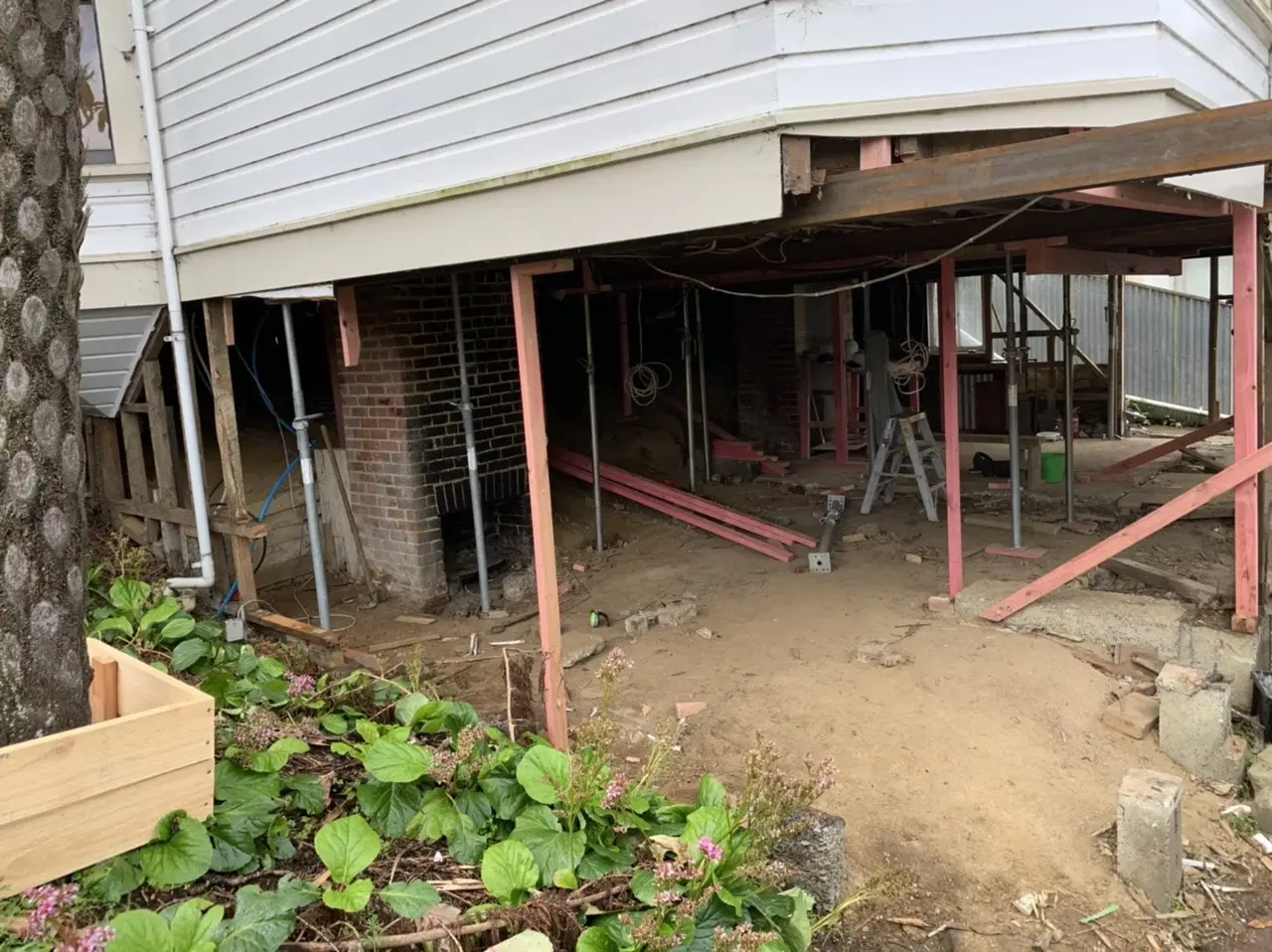
- Foundations: You cannot just put an old house on blocks. It requires a fully engineered foundation system. On a sloping site, the cost to engineer piles for an old structure is often comparable to pouring a brand-new slab.
- Abatement: Many older buildings contain lead paint or asbestos. Removing this to meet modern safety standards is a specialised, expensive process.
The Solution: Feasibility First
Spending $3,000 upfront can save you $100,000 in sunk costs on a project that can never be finished to code.
Read more about our approach to planning in our guide: How to Plan a New Home Build.
How Do I Avoid "Sticker Shock" from Architectural Plans?
The traditional “Design-Bid-Build” model is broken.
In this model, you hire an architect to draw your dream home. You spend six months and tens of thousands of dollars on the design. Then, you send the plans to a builder for pricing.
The quote comes back 30% over your budget.
You are left with a painful choice: pay more than you can afford, or pay the architect again to re-draw the plans.
The Solution: Early Contractor Involvement (ECI)
The only way to prevent this “sticker shock” is to bring the builder to the table during the design phase. This is called Early Contractor Involvement (ECI).
Early builder input can identify design choices that need further cost testing before the plans are finalised.
Value Engineering: Cutting Cost, Not Quality
Early Contractor Involvement can bring construction-cost and buildability input into design decisions.
- Material Swaps:
- Structural Efficiency:
You get the house you want, at a price you can actually build.
How Do Construction Payments and Cash Flow Work?
One of the biggest sources of anxiety for homeowners is Cash Flow Visibility. You have a mortgage to manage, and potentially rent to pay while you build. You cannot afford surprise invoices.
“I don’t know when the bills are hitting.” This is a failure of communication, not construction.
The Professional Approach
Professional builders link the Billing Schedule directly to the Construction Programme.
- The Programme: The roof milestone and payment timing should be set out in the project-specific programme.
- The Drawdown Schedule:
Illustration only, not a CJG project: a programme could show a $45,000 roof milestone payment due in April. You can provide this schedule to your bank to pre-approve the drawdown. You are never left scrambling for funds on a Friday afternoon.
You are never in the dark.
Why Dunedin Homeowners Choose Connor Jones Group
Building a custom home is a massive undertaking. You need more than just a builder; you need a partner who can manage the financial, logistical, and regulatory complexity of the project.
Connor Jones Group provides residential building, engineering and fabrication services.
Building, Engineering and Fabrication: Alongside residential building, we provide engineering and fabrication services. For your project, the required structural work and specialist input depend on the design, site conditions and agreed scope.
Unexpected ground conditions can affect the scope, cost and programme. The contract should establish how changes are recorded and agreed.
We build custom homes and carry out renovations. The plans, site conditions and agreed scope determine the work each project needs.
FAQs on Building Costs
Conclusion
Building a home in Dunedin is a significant financial investment, but it does not have to be a gamble. The difference between a stressful project and a successful one usually comes down to the quality of the planning, the type of contract you sign, and the transparency of your builder.
Do not rely on “back of the napkin” math or generic online calculators. Real financial safety comes from detailed Feasibility Studies and the certainty of a Fixed Price contract.
If you want to know the true cost of your project before you sign a contract, let’s look at the numbers together. Book a consultation with Connor Jones Group today, and we will turn your rough idea into a concrete plan.
Average numbers don’t build custom homes.
While reading Dunedin averages helps you get your bearings, your site’s slope, size, orientation, and finishes dictate your actual investment. If you want a realistic picture of your budget without sitting through a high-pressure sales pitch, use our self-serve estimator tool.
Time to complete: 3 minutes
The output: An honest, realistic baseline range based on current Dunedin material and labour rates.
The catch: None. It’s completely free and self-serve.
12 min read
In This Article
- Why ‘Per Square Metre’ Rates Are Dangerous for Dunedin Builds
- Why Is the Builder’s Quote Higher than the QS Estimate?
- Should I Sign a Fixed Price or Charge-Up Contract?
- Is It Cheaper to Relocate a House or Build New?
- How Do I Avoid "Sticker Shock" from Architectural Plans?
- How Do Construction Payments and Cash Flow Work?
- Why Dunedin Homeowners Choose Connor Jones Group
- FAQs on Building Costs
- Conclusion
Recent Posts
Ready To Start Your Project?
Explore what we build, or get an instant price range in about 5 minutes.
View Our ServicesGet Your Free Estimate